Container and neck finish
Material, opening, land area, flatness, diameter and manufacturing consistency affect liner contact and sealing.
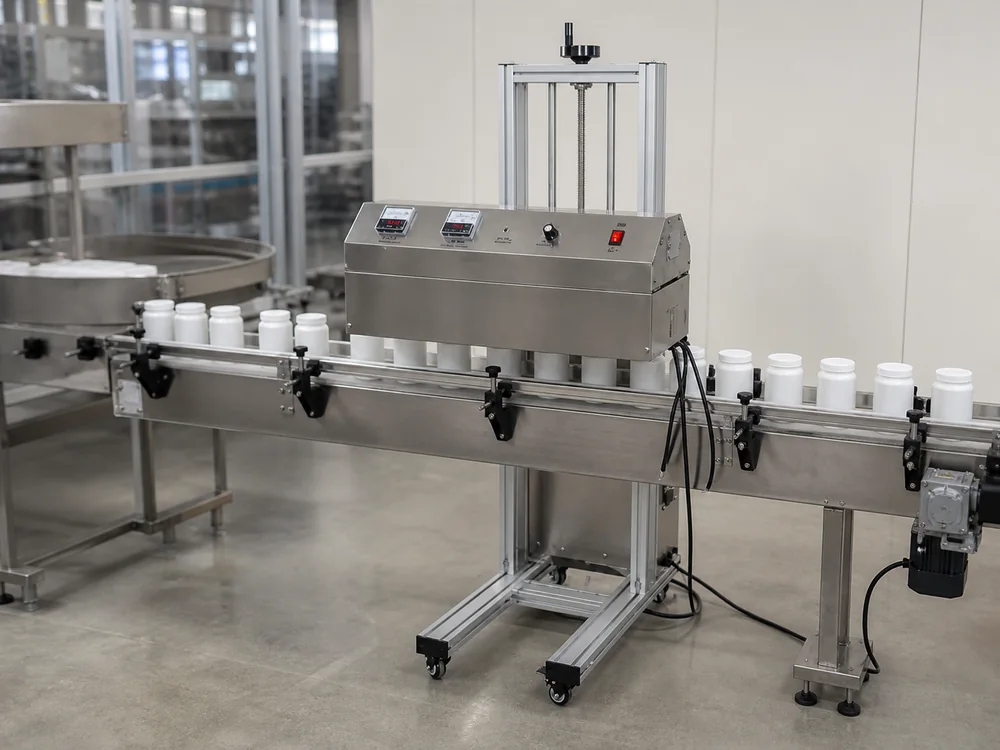
Foil cap-sealing equipment rental
Rent compatible induction cap-sealing equipment for a trial, temporary line or defined production run, with the container, closure, liner, torque, speed and seal standard assessed first.
Check induction sealer availabilityDirect answer
An induction sealer can be hired for selected packaging projects using compatible containers and foil-lined closures. After a cap is applied correctly, the sealer energises the foil layer so it bonds to the container neck. The pack components and operating window must be proven together.
The seal is a system: container material and neck finish, cap, liner, product, torque, head position, power and line speed all influence the result.
Send filled containers, caps and liners from the intended suppliers, drawings or specifications, applied torque, target rate, conveyor height and width, seal tests, site utilities and hire dates.
Pack compatibility
Material, opening, land area, flatness, diameter and manufacturing consistency affect liner contact and sealing.
The cap and liner construction must suit the container, product and intended peel or weld characteristics.
Consistent closure application helps hold the liner against the neck while it is energised and cooled.
Product temperature, contamination around the neck, fill level and contents may influence process stability.
Container rate, pitch, dwell under the sealing head and conveyor control determine the available operating window.
Visual checks, leak tests, peel characteristics or other project criteria should be defined before production begins.
Sealing-process checklist
Capping comes first
If the cap is missing, cross-threaded, loose or inconsistent, the liner may not contact the container neck correctly. The capping and induction stages should therefore be assessed as connected parts of the process.
Where the project also needs closure application, share cap dimensions, torque requirement, feeding method and current capping arrangement.
Explore capping machine hire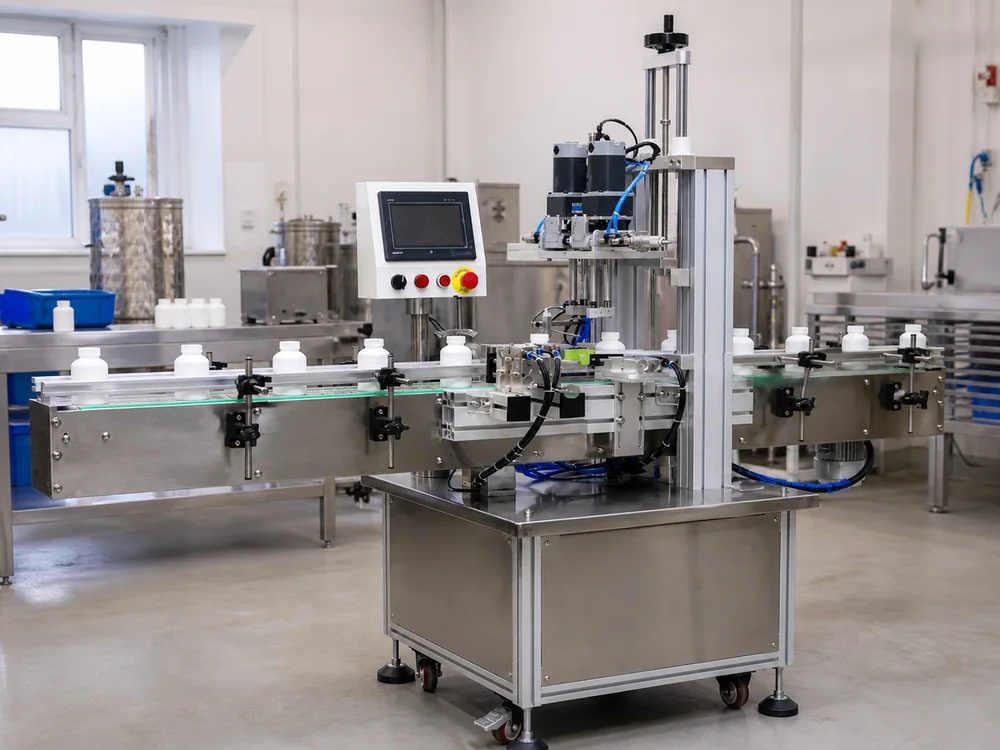
Induction sealing questions
An induction sealer uses an electromagnetic field to heat a compatible foil layer inside a correctly applied closure, bonding the seal to a suitable container neck.
Trial or project hire may be possible where the container, neck finish, cap, foil liner, product, line speed and site are compatible and equipment availability is confirmed.
Provide filled container and closure samples, material specifications, neck dimensions, liner supplier data, cap torque, target speed, conveyor dimensions, seal test criteria, utilities and dates.
No. The container material and neck, cap, liner and product must be designed to work together. Supplier specifications and representative trials are important.
Possibly, if the conveyor height, width, speed, product stability, guides, head clearance, controls, guarding and available space are compatible.
Send the complete closure system
Share container, cap, liner, torque, speed, conveyor and seal criteria.